Subscribe to our newsletter
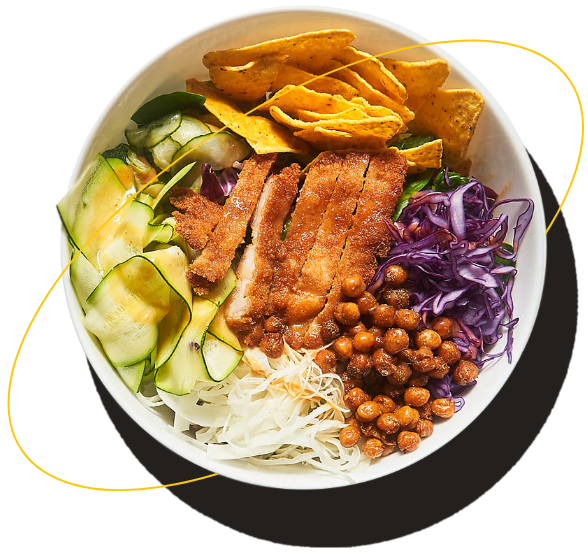


Protein PACT partners collaborate across the food system to achieve our goals
and advance our alignment with consumers’ values and expectations.
Read more about our goals here.


To ensure members provide the best animal care, the Meat Institute aims that by 2025, 100% of members will pass third-party audits for animal care during transportation and handling and will require all suppliers to follow species-specific standards for animal care. Today, 75% of establishments that handle live animals have a comprehensive animal welfare program.

More than 100,000 U.S. farmers and ranchers participate in the Beef Quality Assurance program.
More than 99% of U.S. milk comes from farms participating in the FARM Animal Care Program.
The pork "We Care" commitment sets out principles that govern animal care, environmental protection and food safety on the 67,000 pig farms around the country.
To support safe, diverse workplaces, the Meat Institute aims to see the sector further reduce workplace injuries by 50% (2019 baseline), on top of the 75% reduction achieved from 1999-2019. Today, 100% of establishments reporting data have a written worker safety program in place.

In addition to the goals set for workplace safety in the packer/processor sector, the beef supply chain aims to increase by 10% year-over-year the number of individuals trained for stockmanship and safety on farms and ranches.
Food safety is not a target, it’s our culture. Our goal is to produce safe food, without exceptions.
To contribute to ending hunger in the United States, the Meat Institute will work with organizations like Feeding America to measure and help fill the “protein gap” by 2025, ensuring families in need have enough high-quality protein to meet U.S. dietary guidelines. Meat Institute members announced more than $12 million in food security donations in 2022, and 77% of companies reporting data make donations (cash or products) to food banks.
To help end hunger in the United States, the pork community aims to increase national giving by 100% by 2030 to help feed more food insecure people and bolster the overall health of rural communities.

To help combat hunger, the U.S. dairy industry helped grow the amount of dairy distributed from 446 million pounds in 2019 to 664 million in 2021, according to Feeding America data.

Safe Food/Safe Feed internationally-benchmarked certification programs, established in 2004, encourage excellence by going beyond existing regulations to bolster feed and food safety.
2 https://s.chooserealleather.com/wp-content/uploads/2021/05/Sustainability-Factsheets-Sustainability.pdf
The Meat Institute will support 100% of members to reduce impacts on climate, land, air, and water, and increase transparency consistent with global science-based practices. Of establishments reporting data in 2024, 64% are covered by a company commitment to set scope 1 and 2 emissions reduction targets, and 59% are covered by a company commitment to set scope 3 emissions reduction targets. Read the full report here.
The U.S. beef supply chain has committed to achieve climate neutrality by 2040, while also maintaining and improving water quality and grazing lands.
U.S. dairy aims to achieve GHG neutrality, optimize water usage, and improve water quality by 2050.

By 2025, U.S. soybean farmers aim to reduce land use impact by 10%, reduce soil erosion an additional 25%, increase energy use efficiency by 10%, and reduce total greenhouse gas emissions by 10%. 1
By 2030, U.S. corn growers are committed to reduce soil erosion and GHG emissions by 13%, and increase energy efficiency by 13%, land efficiency by 12%, and water irrigation efficiency by 15%.
In alignment with the We Care principles, the U.S. pork sector has set a goal to reduce GHG emissions by 40% by 2030, from a 2015 baseline. The National Pork Board helps producers measure, document and share their sustainable farm practices and continuous improvement with On-farm Sustainability Reports.
The IFEEDER Sustainability Road Map equips animal food stakeholders across the value chain to track data and achieve goals in sustainability-focused areas like land management, climate-smart practices and crop innovations, and use of feed additives to reduce livestock emissions.
The U.S. leather industry uses 85% of hides from dairy and meat2 and has committed to ensuring the remaining 17% are also put to use for clothing, shoes, furniture, car interiors, and more.
1 https://www.unitedsoybean.org/issue-briefs/sustainability/